
Since the beginning of 2020, i-bankers have collected nearly Rs 1,800 crore by way of IPO fees. Interestingly, the India fees this year form just 1 per cent of the global fee pool of $13.7 billion from IPOs.

Experts believe that the government needs more innovative ways to secure the cyber space in the country and a cess is more like a punishment which would not help in the long run.

SBI Cards on Tuesday launched a credit card especially meant for transactions on e-commerce websites.

Niyo is also offering bonuses and ESOPs, taking the total stock grants to over Rs 100 crore for all eligible employees.

Young Indian entrepreneurs hope to share some of the limelight too at the Hyderabad event.

India needs to follow countries such as Singapore who have and are further bolstering their cyber security apparatus.

But mobile wallet companies say many consumers are not ready to give out their PAN

For large start-ups the US market is considered to be a preferred destination, as Indian investors were seen as hesitant to pay the kind of valuation private equity investors or the US markets pay. However, Zomato's listing has quashed these notions.

BBPS allows you to pay electricity, telephone, water supply, gas and DTH bills. Its scope will be expanded to include other payments like school and university fees, government taxes, insurance premiums, mutual fund investments, even credit card bills.

Benefits of demonetisation come at a heavy price for Fintech firms. They will spend a massive amount on securing and reinforcing their cyber security apparatus this financial year. Karan Choudhury reports.

While mobile wallets are still busy exploring the multiple facets of interoperability, experts believe that bringing in new customers would be costly affair and the numbers of new wallet users might not see a major hike anytime soon.

'We expect the bull run to continue until economic growth continues.'

While a wallet is convenient, payments bank offers interest on deposits and ATM facility.

In the excitement over the allocation of bank licences for the private sector, a new category of licence offered by the Reserve Bank of India (RBI) last year went almost unnoticed. That was when the RBI consolidated the rules for prepaid payment instruments (PPI), popularly understood as e-wallets or gift cards. In the process, the regulator has fast-forwarded a bottom-up card usage industry in India that is completely different from the world of bank-linked credit and debit cards.

Hectic fundraising through initial public offerings (IPOs) is expected in October-November, with at least 30 companies are looking to collectively raise over Rs 45,000 crore through initial share-sales, merchant banking sources said. Of the total fundraising, a large chunk would be garnered by technology-driven companies. The successful IPO of food delivery company Zomato, which was overwhelmingly subscribed by over 38 times, encouraged new-age tech companies to come out with their primary share-sales.

Bug bounty hunters or independent ethical hackers are certified cybersecurity professionals or security researchers who crawl the web, scanning the systems for gaps through which hackers can sneak in and alert the companies, says Shivani Shinde.

Agriculture, social services, education, defence and so on will be brought into the digital fold and every gram panchayat will be connected to the internet.

The police have almost no way of tracking the $200 billion plus money flowing online during this World Cup.

Joydeep Ghosh takes stock of personal finances after the life-altering surprises of 2016.

Banking is first about trust and integrity and then about technology and the rest.
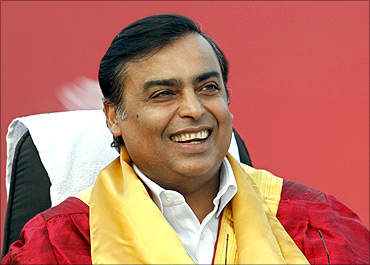
Payments banks will mainly deal in remittance services and accept deposits of up to Rs 1 lakh.

Non-resident individuals (NRIs) have also been allowed to apply for the niche banking licence, provided they plan to return to India.

From mass layoffs to acquisitions, here's how the Indian start-up industry kept us on our toes.

From small retailers' experiences with e-wallets to digital transaction numbers post demonetisation, Geetanjali Krishna and Karan Choudhury find out where the truth lies.
 © 2026 Rediff.com - Advertise with us - Disclaimer - Privacy Policy - Sitemap - Feedback - About us - Terms of use - Grievances